

Understanding Spider Lift Ground Pressure: What Operators Need to Know
Key Takeaways:
The ground pressure a spider lift exerts is not entirely dependent on its weight. Other factors that can affect loading include:
Tracks
Outriggers
Basket load
Boom position
Surface type
Ground conditions
Assessing the worksite thoroughly and determining point loads, along with using ground protection when needed, can help operators prevent surface damage or machine stability loss.
Ideal for elevated tasks in wildly varying Canadian terrain, spider lifts can adapt to virtually any ground conditions. They can be easily positioned on soil, landscaping, gravel, finished floors, or any other sensitive area that demands careful pre-operation evaluation.
In fact, understanding how the machine distributes its weight can help operators plan damage-free, stable set-ups without compromising reach or access.
In today’s blog, Platform Basket Canada, manufacturers of the best aerial lifts available in Ontario, will educate you about spider lift ground pressure and how you can work your way around it.
What Is Spider Lift Ground Pressure?
Ground pressure refers to the force a spider lift exerts on the ground immediately under its points of contact. The machine's configuration and overall weight affect the pressure it applies during operation.
Definition of Ground Pressure
The load applied over a specific area of ground by an external force or presence is referred to as its ground pressure. Larger machines with wider surface contact areas are more efficient in distributing their overall weight, which might result in lower ground pressure. On the other hand, concentrated loads can exert greater pressure on a smaller area.
How Ground Pressure Differs From Machine Weight
Ground pressure is not the same as machine weight. In fact, the latter is simply the total mass of a machine. While ground pressure is how that mass impacts the surface it is on. Think of it this way: a compact spider lift might weigh as much as a large luxury SUV, but their ground pressures will be entirely different because of their design and points of contact.
Why Ground Pressure Matters for Aerial Lift Operations
When it comes to aerial lift operations, ground pressure is an important factor to consider. If the ground capacity does not support the weight of the machine, issues such as sinking, settlement, instability, and ground damage are more likely to arise. However, they can be avoided by planning ground pressure into the lift’s setup.
How Do Spider Lifts Distribute Their Weight?
It might look like a spider lift is concentrating its entire weight on small outriggers, but that would be too simple an explanation. Most of these platforms feature a tracked undercarriage and a stabilization system that work together to distribute their entire load across the machine. Here is how it works:
Role of Rubber Tracks
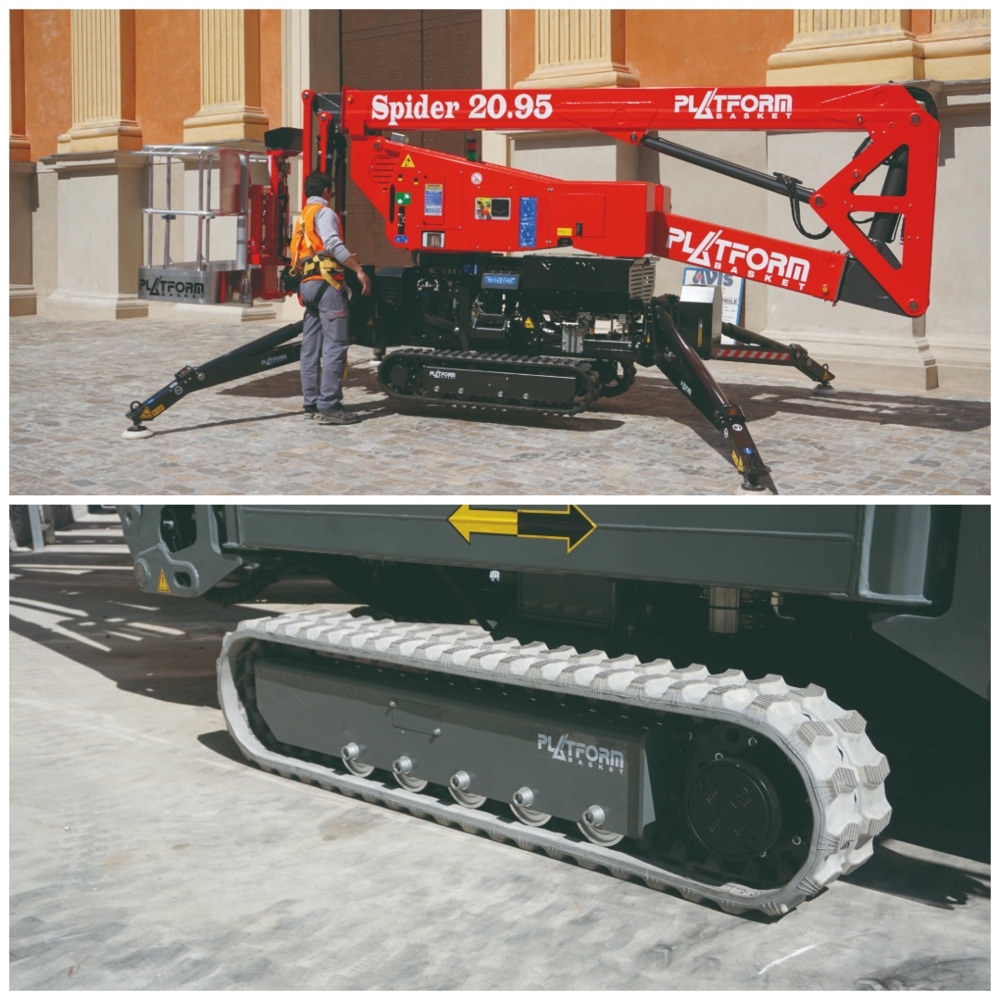
Rubber tracks maximize the contact area of a spider lift with the surface it is on. Not only does this support easy mobility, but it also allows the machine to distribute its weight more evenly during travel to minimize impact.
Function of Outriggers and Stabilizer Pads
Many machines come with outriggers and stabilizer pads built in, which, when deployed, transfer the load of the machine more efficiently. In fact, deploying these on sensitive surfaces is recommended as they provide greater ground protection.
How Load Distribution Changes During Operation
While this might seem like a complication, ground loading can actually change as the boom of a lift moves. It can also alter if the platform basket is loaded or if the machine is repositioned. So operators must consider the entire setup to evaluate the ground impact of their machines.
Why Ground Pressure Can Vary by Machine Configuration
The configuration of a spider lift, including its track position, outrigger deployment, boom position, platform load, and operating conditions, influences the ground pressure it exerts at any given point in time during its use.
What Factors Affect Spider Lift Ground Pressure?
The ground pressure tracked spider lifts exert is not dependent on their weight alone. The configuration of the machine, its characteristics, and operating conditions have a major role to play too.
Machine Weight
The weight of the machine obviously affects surface conditions. In fact, larger spider lifts should be chosen with caution, as their greater mass may damage delicate or sensitive grounds, making weight an essential part of planning spider lift operations.
Outrigger Configuration
The position of the outriggers influences how load is transferred. Individual outrigger point loads should be accounted for when evaluating if the ground is capable of supporting the machine.
Working Height and Outreach
The movement of the boom throughout its operational range can redistribute the load a machine is carrying across its contact points. Operators must always stick to the manufacturer’s instructions to prevent loss of balance in such cases.
Basket Load
From tools to materials and personnel, the basket of a spider lift is made to carry a specified range of weight, which must be adhered to and accounted for when calculating the machine’s overall ground pressure.
Ground Contact Area
A larger ground contact area helps in distributing the load a machine exerts in a more efficient and safe manner. To minimize ground pressure, operators must deploy their lift’s tracks, mats, and pads – especially on delicate surfaces.
Surface Type and Ground Conditions
The type of surface a spider lift is operating on is bound to have an impact on the force it applies. For example, soft surfaces like soil are likely to cave, while hard surfaces like gravel, asphalt, and concrete are likely to hold their own. Moisture, frost, voids, excavations, and previous disturbances are also influencing factors.
Machine Model and Manufacturer Specifications
The weights, dimensions, outrigger arrangements, and configurations of different spider lift models can also affect the ground pressure they exert.
Why Does Ground Pressure Matter on Different Surfaces?
Even if the same spider lift platform setup is used, the ground underneath it can react differently, thereby affecting the machine’s performance. Evaluating how different ground conditions impact operations is key to having a sensible setup.
Soil and Landscaped Areas
Soil, grass, and other landscaped areas are softer and delicate by default, requiring protection from concentrated loads.
Gravel and Unfinished Ground
Loose gravel can shift or move underneath the outrigger pads of a machine. Ground stability should be verified in such cases before a spider lift is deployed.
Asphalt and Concrete
Providing a predictable support base, hard surfaces are generally safe and require the least amount of evaluation. However, they must be checked for cracks, damage, trenches, voids, etc. before work begins.
Finished Floors and Sensitive Surfaces
Indoor floors, decorative paving, and other finished surfaces require the use of lighter machines and protective mats and pads to minimize or prevent surface damage.
Slopes and Uneven Ground
The stability of a spider lift can be severely impacted by the sloping or uneven nature of the ground it is on. In such cases, operators must follow the manufacturer’s guidelines to maintain stability.
How Can Operators Reduce Ground Pressure Risks?
Proper site assessment and spider lift operation planning are essential to managing ground pressure and reducing any associated risks. Here is what operators can do to keep things stable:
Assess the Ground Before Setup
Inspect the surface thoroughly to detect any soft areas that may cause the lift to lose its balance. Check for drainage issues, excavations, voids, cracks, and other potentially disbalancing factors too.
Use Appropriate Outrigger Pads and Mats
Always use outrigger pads and mats made by the manufacturer of the machine only. They are the most compatible, meaning you can trust them to offer maximum stability and support.
Follow Manufacturer Load and Setup Requirements
Always follow the manufacturer’s load and setup guidelines when using spider lifts. Sticking to the limitations mentioned ensures safe operating conditions.
Avoid Unstable Edges, Voids, and Unsupported Areas
Do not assume that a surface is stable just because the ground appears solid to the naked eye. It is still possible it might be hollow. In fact, that is often the case with areas near excavations, trenches, drainage structures, or unsupported edges.
Monitor Ground Conditions During Extended Work
After setting up an exclusion zone for safe operations, operators must continue to monitor ground conditions during prolonged hours of work. Factors such as settlement, moisture, vibration or changing site activity may call their continued suitability and safety into question.
How to Evaluate Ground Pressure Before Using a Spider Lift
Equipment and site planning must involve a thorough ground pressure check to determine if the surface conditions can support the configurations of the chosen spider lift. A typical ground pressure evaluation process involves:
Identify the Surface and Its Limitations
Name the surface for what it is – soil, gravel, asphalt, concrete, flooring, or any other surface – and identify its weaknesses. Make a list of all those found.
Review the Machine's Ground Pressure Specifications
Verify the list of surface limitations against the spider lift’s ground pressure specifications to determine if the two align. Only use machines that are capable of working on surface conditions the project demands.
Determine Outrigger Point Loads
Calculate the load applied at each outrigger position when working in areas with sensitive or uneven surfaces. This can be instrumental in preventing damage both to the machine and the ground it has been positioned on.
Consider Required Mats or Spreaders
If the surface is unable to handle the planned point loads of the machine, use manufacturer-specified spreaders or mats to distribute load more efficiently.
Confirm the Planned Setup Is Suitable
Before work begins, verify ground conditions against the machine’s configuration and stabilization arrangement to ascertain the planned setup is viable.
Common Ground Pressure Mistakes to Avoid
Assuming ground pressure instead of actively evaluating it is the starting point of all mistakes. Avoiding the following can make site assessment more effective.
Looking Only at Total Machine Weight
The total weight of the machine is not an indicator of how it spreads its load across the surface it is on.
Ignoring Outrigger Point Loads
Concentrated loads are a reality of individual support points and should be considered when determining the spider lift’s actual ground pressure.
Assuming Every Surface Can Support the Machine
The appearance of a surface is not a real indicator of its load-bearing capacity.
Skipping Manufacturer Specifications
Model-specific operating information should be diligently followed instead of applying generic equipment assumptions.
Using Inadequate Ground Protection
Proper ground protection in the shape of pads and mats prevents surface damage.
Spider Lift Ground Pressure Planning Checklist
Before spider lift setup, ground crews and operators must check the following:
- The weight and configuration of the chosen spider lift
- Ground pressure specifications
- Type of surface on site
- Ground conditions
- Position of outriggers and outrigger pads
- Point loads
- Availability of protection mats
- Presence of any underground hazards
- Manufacturer requirements
Conclusion
Developing a deep understanding of spider lift ground pressure can help ground operators set up improved exclusion zones while supporting safe machine operation. Using self-leveling lifts can be a major boon in this regard. Platform Basket Canada’s stable and self-leveling spider lifts can tackle any type of ground conditions throughout Ontario. Contact us to explore our catalog of advanced and intelligent platforms.
FAQs
What is ground pressure on a spider lift?
Ground pressure refers to the force a spider lift applies on its supporting surface – either during movement or positioning.
Why is ground pressure important when using a spider lift?
Evaluating ground pressure can help operators determine whether the worksite’s ground is capable of supporting the machine without any damage or stability issues.
Do spider lifts have low ground pressure?
Most spider lifts are built to be compact, with tracked undercarriages that help in the effective distribution of their loads to minimize the ground pressure they exert.
How do outrigger pads affect spider lift ground pressure?
Outrigger pads are designed to transfer loads to specific support points, thereby decreasing the impact of concentrated loads to an extent.
Can spider lifts be used on sensitive surfaces?
Yes, they can be, but only if the chosen spider lift model comes with features that support work on sensitive surfaces. Check the manufacturer’s manual to confirm the same.