

Spider Lifts: Planning Exclusion Zones Around Tree Work
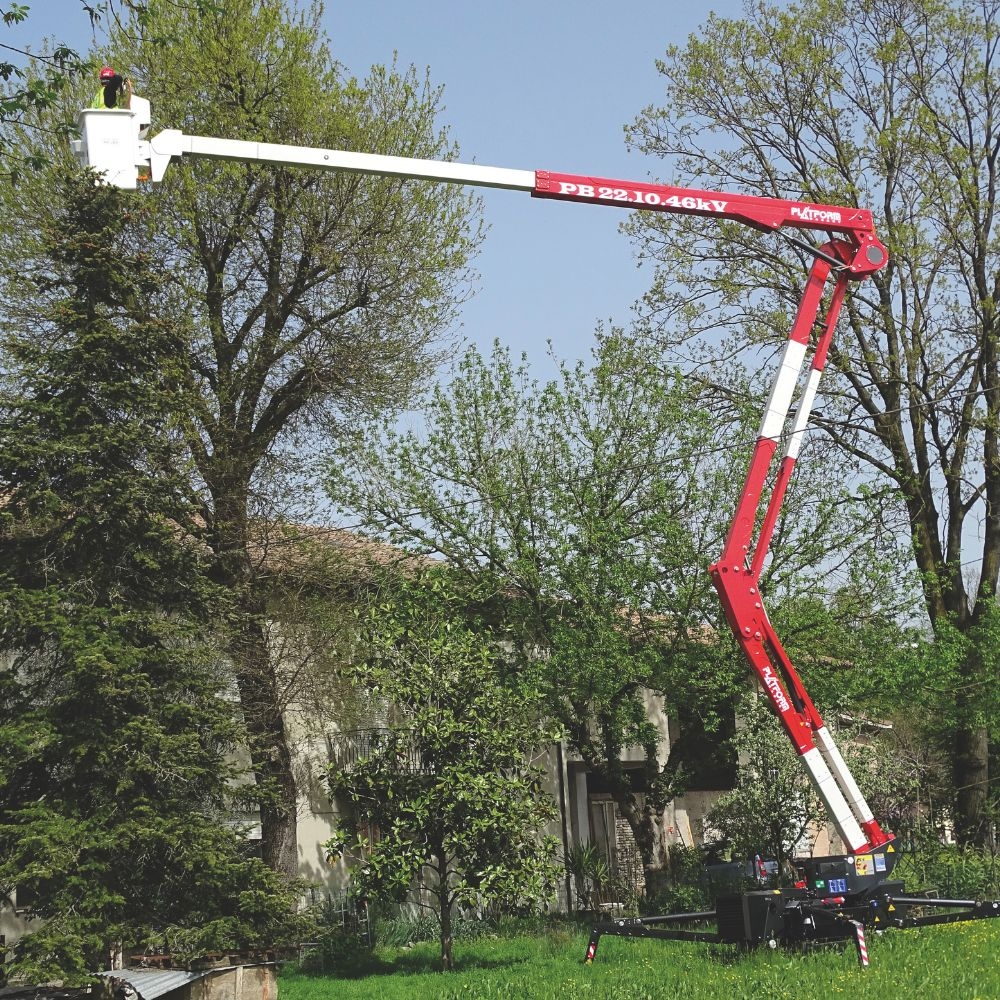
Tree care might seem like a simple pruning task, but it is not without its own set of hazards. That is why simply selecting the right spider lift for tree care is not enough. Arborists must have a plan in place for hazard management too.
Proper management of the surrounding area minimizes the risks posed by falling branches and moving equipment. Especially if you factor in that urban arboriculture projects take place in busy environments, which leave pedestrians, crews, vehicles, and nearby property equally exposed to the aforementioned hazards.
In today’s blog, Platform Basket Canada will share tips on how to develop a safe and well-planned exclusion zone to separate people and property from active tree work, thereby giving crews enough space to work freely and safely.
Steps To Planning A Safe Spider Lift Exclusion Zone For Tree Care
Our 6-step plan can help ground crews and spider lift operators set up safe exclusion zones that improve onsite productivity and safety without consuming too much time of the available work window.
Step #1: Identify hazards and hazardous areas before setting up
Prior to deploying a spider lift onsite, arborists must scout their working area to identify the most potentially hazardous spot. This spot should be a part of the exclusion zone along with the area required to work the spider lift.
Accounting for both prevents dead limbs of large trees such as oak, maple, pine, cedar, etc. from hitting nearby pedestrians or property as they fall after pruning work. In fact, identifying the following can help teams decide exactly where crews and equipment should be positioned for maximum safety and efficiency:
- The area right underneath the primary work zone
- Possible branch drop locations
- Spider lift setup and travel area
- Ground crew routes
- Nearby property and pedestrian points
Step #2: Reserve separate spots for spider lifts and drop zones
Working directly underneath dead limbs or tree canopies is not recommended. Spider lifts demand their own working area for safe operations. If drop zones coincide with their working routes, both the operator and the machine can experience injury. That is why it is important to segregate hazard zones from work zones. As a general rule of thumb, it is recommended to position spider lifts on one side of the tree so that falling branches directly hit the demarcated safe ground beneath them.
Step #3: Plan a safe space for ground crews
Ground workers play a critical role in arboriculture projects. They are responsible for safely collecting and disposing of tree waste. They also provide valuable positioning assistance for spider lifts. However, they should never be asked to stand directly beneath the platform or within active drop zones. Doing so can put them at greater risk of injury.
The following strategies should be employed to prevent them from accidentally entering exclusion zones:
- Designate clear spots with ropes for branch processing and chipper operations
- Clearly demarcate and restrict spider lift movement area
- Maintain constant communication with machine operator to coordinate ground movement
Step #4: Control vehicle and pedestrian access
Strict measures should be taken to restrict pedestrian and vehicular access in residential neighborhoods, public parks, and commercial properties during tree care work. Crews must use cones, barriers, signage, and spotters to set up clear exclusion zones to prevent pedestrians and vehicles from entering active work areas.
Step #5: Protect surrounding properties
Exclusion zones should be planned to protect nearby properties as well, including buildings, vehicles, fencing, landscaping, etc., from the impact of moving spider lifts or falling branches. Establishing a wider control area is recommended for projects involving work around historical or high-value properties.
Step #6: Review and refine exclusion zones on the job
Site requirements and tree work conditions can change quickly. It is important to be agile on the job and change or refine exclusion zones as arborists work on different parts of the same tree.
Conclusion
Spider lifts are an indispensable part of tree care jobs. But they cannot guarantee safe operations on their own. Proper planning and setting up of clearly demarcated exclusion zones is the key to safety and success on all tree care jobs, no matter how challenging or easy.
Looking for the safest spider lifts for your arboriculture business? Platform Basket Canada's self-leveling spider lifts adapt to changing ground conditions, proving to be the safest machines for Ontario crews to work with. Contact us to learn how our spider lifts support tree care projects in all kinds of landscapes.
FAQs
How should exclusion zones be demarcated for all to see?
Proper demarcation techniques should be used to convey the same, including verbal communication, clearly visible signage, spotters, cones, barriers, or other common site-control methods.
Do exclusion zones need to change during multi-day tree care jobs?
Yes. Exclusion zones should be re-evaluated each day of the job to determine their relevance and safety for that day’s tasks. They should be altered to suit the day’s requirements.
What to do if an unauthorized person enters an exclusion zone?
All work should be immediately halted till the unauthorized person has been safely removed from the site. Operations should be resumed only when operators get the green signal.