

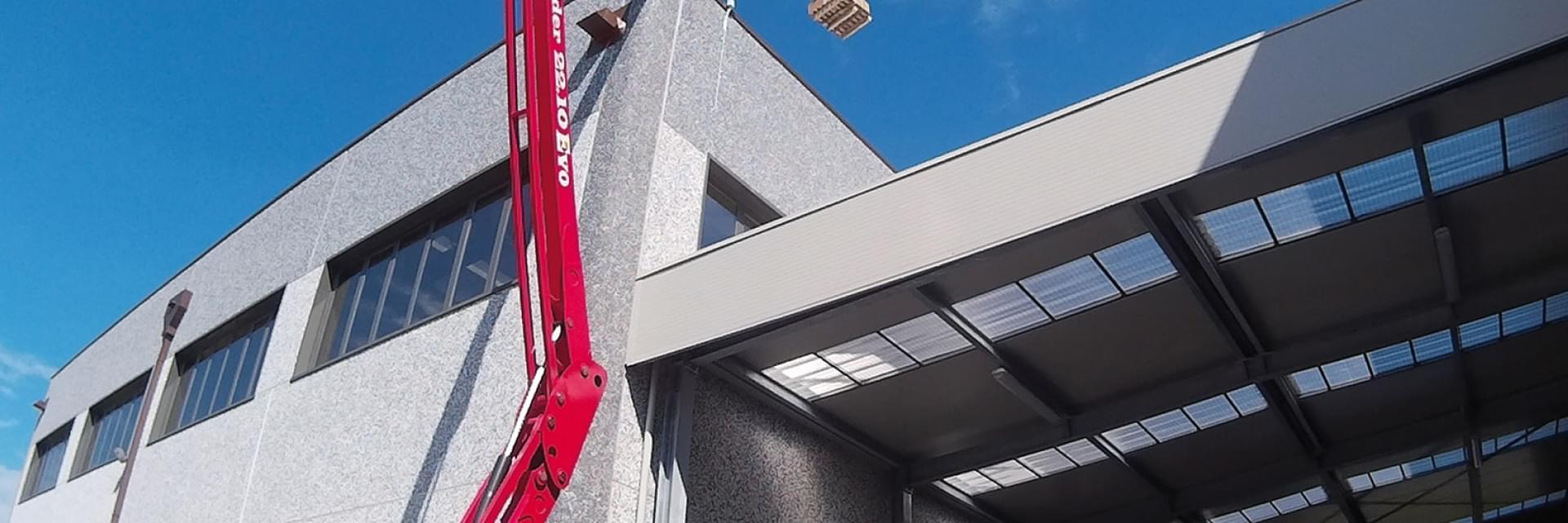
Why Tracked Spider Lifts Work for Canadian Job Sites
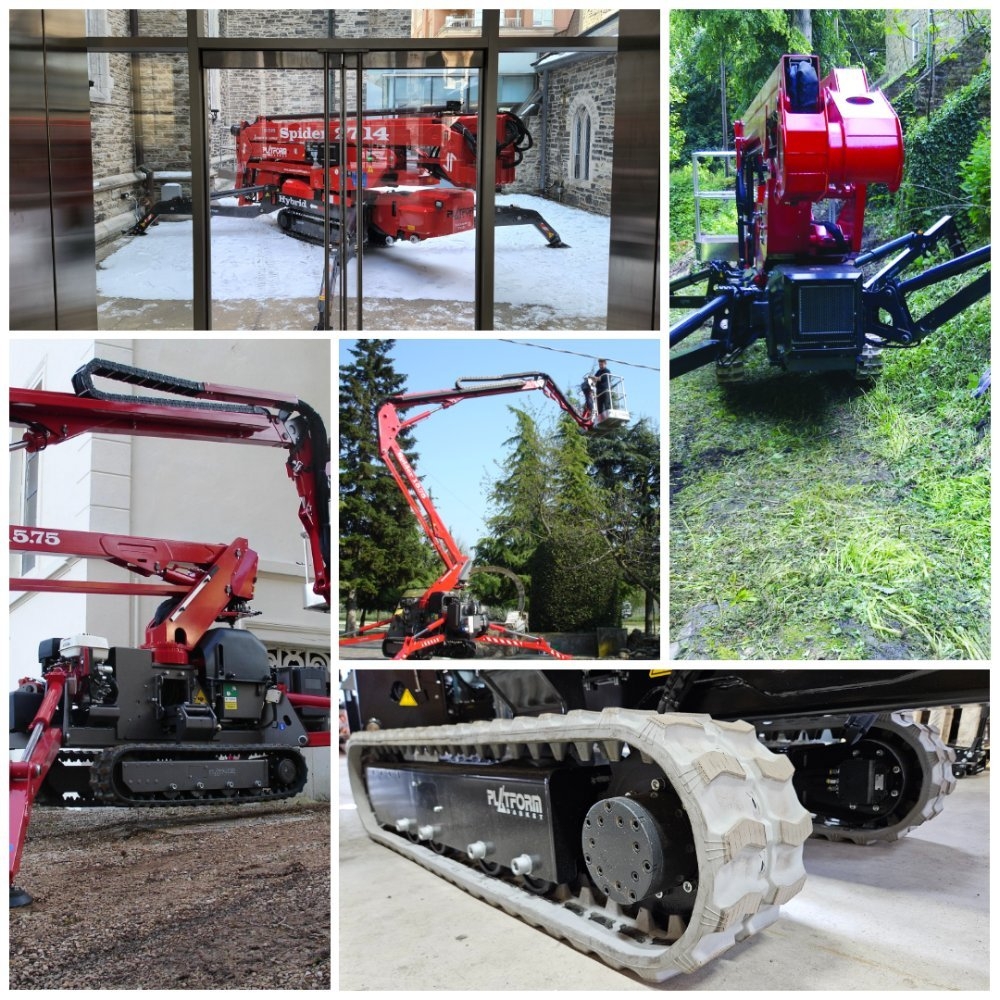
Key Takeaways:
As far as working at heights is concerned, Canadian jobsites present several unique challenges that only specialized equipment can address. Elevated access solutions such as Platform Basket Canada’s tracked spider lifts can:
- Operate on all kinds of terrain
- Work on snowy grounds
- Handle tasks common to construction, tree care, and property maintenance
They are the perfect all-weather, all-season, all-terrain choice for worksites across Canada.
Canadian terrain is not without its challenges – especially when working at heights is involved.
From snowy grounds to soft slopes – the diverse topography of the country can turn even the simplest elevated tasks into a complex affair that requires careful planning and the use of the right equipment.
Tracked spider lifts have a proven “track” record of navigating Canadian terrain like the pro-grade machines they are.
That is why today’s blog from Platform Basket Canada – top supplier of made-for-Canada aerial lifts, will focus on how tracked spider lifts support smooth and safe elevated work on Canadian jobsites.
Understanding Tracked Spider Lifts
Knowing what tracked spider lifts are, how they perform, and the industries they are perfect for is critical before getting one delivered to your site. This knowledge can help you ascertain its real value for the type of elevated work your business caters to.
What is a tracked spider lift?
A tracked spider lift is a type of aerial work platform that swaps wheels in favor of a crawler-style undercarriage for stable mobility over varying terrains. Compact and lightweight, they are capable of moving across surfaces that traditional lifting equipment cannot navigate smoothly.
How tracked lifts differ from wheeled lifts
The major difference between tracked and wheeled lifts is that the former is more adaptable by nature. While wheeled platforms perform well on stable, even, and solid surfaces, tracked lifts provide better traction on all kinds of ground, including soft, uneven, or irregular surfaces. This makes them the better choice for worksites with unpredictable ground conditions.
Industries that commonly use spider lifts
From construction to arboriculture, facility maintenance, and industrial operations, tracked spider lifts can be safely used in a wide variety of settings. Their versatility allows them to bypass limiting factors such as irregular terrain and narrow access points, making them perfect for both indoor and outdoor use.
Why Canadian Jobsites Require Tracked Lifts
An excellent question, one can argue that tracked crawler lifts in Canada are unnecessary, as traditional cranes and methods such as hoisting and rigging have been getting the job done for decades now. However, they have not proven to be the safest or most efficient method to lift loads or work at heights. That’s where spider lifts come in.
Uneven terrain challenges on construction sites
As mentioned before, the greatest advantage of tracked spider lifts is their ability to navigate any type of terrain without losing their balance or tipping over. No type of ground is a deterrent for them – whether it’s slopes, gravel, or surfaces with uneven grading.
Working on soft grounds and landscaped areas
Both residential and commercial projects often take place on soft soil or landscaped surfaces and turf. Such ground conditions call for the use of equipment that does not damage delicate or sensitive surfaces. Spider lifts with tracks excel in this regard.
Job sites with snow, mud, or gravel
Each of these factors can limit the traction of a conventional wheeled machine, thus increasing the risk of instability. However, the rubber tracks of spider lifts enable safe navigation through grounds impacted by changing seasons.
Accessing remote or unfinished locations
Partially completed developments and remote job sites often lack paved access routes, thus necessitating the use of highly mobile machines that work their way around obstacles.
Common Canadian Jobsite Challenges Checklist
Canadian jobsites are difficult by default, thanks to their varying climate and topography. Here are the unique challenges they bring when it comes to working at heights:
- Grounds with steep slopes
- Snow-covered surfaces in winters
- Workspaces with limited access
- Temporary construction surfaces
- Landscaped or sensitive ground
Key Advantages Of Tracked Spider Lifts
Having tracks and greater mobility is not the only advantage of this type of spider lift. They are equipped with features that offer perks Canadian operators are sure to appreciate:
Superior traction on rough terrain
Compact tracked aerial lifts offer superior mobility around obstacles, allowing you to reposition your lift without much effort or loss of stability.
Low ground pressure on sensitive surfaces
Certain spider lift models, such as the ones Platform Basket Canada supplies, come equipped with outrigger pads, which allow you to position them on grounds with delicate surfaces without inflicting damage. Plus, their overall lightweight build exerts low ground pressure, too.
Compact footprint for restricted spaces
Portable by design, the slim profile of spider aerial lifts allows them to easily access tight areas, making them ideal for confined working zones or those with narrow entry points.
Enhanced stability during elevated work
With its articulating boom and robust outriggers, these machines provide exceptional stability when working at heights, making it a reliable base for elevated tasks.
Performance Benefits Checklist
Here’s a short and quick list of the major benefits of tracked spider lifts:
- Superior traction on all surfaces
- Minimal damage on sensitive grounds
- Unparalleled stability
- Smooth controls, navigation, and maneuverability
- Access to all kinds of restricted job sites
Construction Applications For Tracked Spider Lifts
When it comes to the construction sector, tracked spider lifts can be an asset on-site. They can help contractors and builders complete a wide array of complex tasks without incident:
Structural installation and building work
As elevated access solutions, these machines can support a range of structural work, including steel installation, framing, roof truss placement, and more – especially in areas where traditional cranes are not an option.
Exterior facade maintenance
Facade repairs, cladding installation, and building inspection are examples of exterior maintenance work that can be safely performed with this type of aerial work platform.
Roofing and structural inspections
Contractors can use these lifts to examine and repair roofs or other elevated sections of buildings without needing large staging areas or causing massive disruptions.
Interior work in large buildings
Places such as warehouses, atriums, airports, theaters, etc. require frequent indoor maintenance work, which these tracked spider lifts for construction can support in a safe and efficient manner.
Steps To Using Tracked Lifts On Construction Sites
Tracked lifts are perfect for construction sites, provided operators follow these instructions:
- Investigate ground conditions and local terrain
- Choose a spider lift of appropriate working height and lifting capacity
- Position the lift safely at the specified work zone
- Deploy outriggers to maximize stability on uneven surfaces
- Start working at heights safely
Arboriculture & Tree Care Applications
Spider lifts have been the top choice of arborists for tree care activities due to their exceptional reach, precise positioning, and stable operations. They are commonly used for:
Tree trimming in residential areas
Residential areas provide limited access for tree care work. Tracked spider lifts fit perfectly in narrow yards and pathways, allowing arborists to carry out critical work near homes and residential buildings.
Accessing tall trees in tight spaces
Their ability to pass through narrow entry points, combined with the impressive reach of their articulating booms, allows arborists to reach tree care areas that would be inaccessible otherwise.
Working on slopes and landscaped terrain
A lot of tree care tasks often involve working on landscaped or uneven ground where tracked mobility serves as a tactical advantage over their wheeled counterparts.
Safe canopy access for arborists
Stable positioning, along with well-protected baskets allow arborists to prune branches with greater precision and control.
Tracked Spider Lifts For Narrow Access Jobsites
Narrow access is a challenge that traditional cranes and other large equipment just cannot conquer. Here is how spider lifts make easy work of them:
Working between buildings or structures
Confined spaces are the norm on urban construction sites. Spider lifts can neatly fold into a width of no more than 35 inches, allowing them to reach areas other machines cannot.
Accessing confined indoor locations
Their 35-inch form factor in a folded state also makes them a good choice for indoor work in facilities such as malls, warehouses, and commercial buildings.
Navigating through gates and tight pathways
Whether it’s a freight elevator or a standard doorway, spider lifts can move through restricted entry points so that they can be used for retrofit and renovation projects.
Reaching difficult vertical zones
Their intelligent design, along with their outstanding reach capabilities allow access to extremely high work areas that would otherwise require extremely complex scaffolding.
Situations Where Narrow Access Matters Checklist
- Construction sites in urban areas
- Tree care tasks in the backyards of residential spaces
- Atriums in airports, malls, hotels, etc.
- Indoor facilities that require frequent maintenance
Operating Spider Lifts Safely In Canadian Conditions
While tracked spider lifts are inherently safe and stable, operating them the right way is critical in preventing workplace accidents. Here are steps that can help:
Site inspection before lift operation
Despite their ability to work on versatile ground conditions, the working area should be inspected thoroughly to understand if it is safe enough for successful spider lift deployment.
Stabilizing equipment on uneven terrain
It is best to bring out the machine’s outriggers and stabilizers when working on sloping ground to add that extra layer of protection.
Weather considerations during operation
Avoid using this equipment during snowstorms, thunderstorms, heavy rain, extreme winds, and excessive heat, as the risk to life and limb increases significantly in such conditions.
Operator training and safety procedure
Having prior certified training in spider lift operation is a must for safe use. Unqualified operators should not be allowed to work with these machines.
Check out our spider lift operation guide to learn more operational best practices.
Choosing The Right Tracked Spider Lift For Your Project
Spider lift selection for your project should be based on a number of critical factors that determine its appropriateness for the job.
Evaluate terrain and ground conditions
Understanding the job environment can help you find the right fit in terms of reach and lifting capacity.
Determine the required working height
Getting a model with a lower height can present access issues, while one with a greater height than needed can be a stability threat. That is why aligning your machine’s outreach with specific tasks is a must.
Consider weight and transport requirements
Transport logistics and site access should play a major role in your decision to opt for tracked spider lift rentals in Canada.
Match lift size to jobsite access
Selecting compact models for indoor work or extremely narrow work zones is more sensible.
Selecting A Tracked Spider Lift Checklist
Here’s a brief spider lift selection checklist to help you out:
- Assess working height
- Evaluate ground conditions
- Review access options
- Confirm load capacity requirements
- Select lift of appropriate configuration
Conclusion: Why Tracked Spider Lifts Are Ideal for Canadian Projects
The perfect blend of stability, mobility, and adaptability, tracked spider lifts are a must-have on jobsites. However, before renting or purchasing one, it is critical to check if your chosen model has been made for Canadian conditions.
Platform Basket Canada’s CSA-accredited spider lifts feature Tier 4 engines, making them the perfect platforms for Canadian terrain. Contact us to explore our range of versatile, efficient, and practical vertical access solutions.
FAQs
What is a tracked spider lift used for?
They are typically used to carry out elevated tasks in sectors such as construction, maintenance, renovations, and arboriculture.
Are tracked spider lifts better for rough terrain?
Yes. Their tracks provide superior traction on uneven ground conditions.
Can spider lifts operate in snow or mud?
While they can operate on soft grounds, safe use depends on ground stability and site preparation.
What industries commonly use spider lifts in Canada?
Construction, arboriculture, facility maintenance, renovations and repairs, and industrial sectors commonly use spider lifts for elevated work.
How high can a tracked spider lift reach?
Working heights vary by model. Platform Basket Canada’s spider lifts can reach a maximum height of 54 m.