

5 Signs You’re Using The Wrong Aerial Work Platform For The Job
While reach and extension are important when choosing an aerial lift, they should not be the only items on your checklist. The goal should be to complete the job you have been tasked with in a safe and efficient manner. Something that is only possible when you choose a machine that is compatible with your job site.
Yet many crews unknowingly end up selecting equipment that is not really suited to the task at hand, the environment, or both, thus leading to unnecessary delays and increased costs.
In this blog, Platform Basket Canada – Ontario’s most preferred supplier of aerial work platforms – will outline signs your lift is working against you so you can evaluate your decision and make the right choice.
What Are The Signs You Have Chosen The Wrong Aerial Work Platform?
You might think you have picked out the best aerial work platform for the job, but then expected issues such as safety risks arise, and now you are not so sure your choice can support the work you have to do. Well, if you are in the same boat, here are 5 signs that reveal you need to replace your selection with a more appropriate lift type:
Access takes longer than finishing the job
One of the clearest red flags is spending more time maneuvering your machine than using it to do the task you have been assigned. If positioning is taking longer than it should, it means you are using a larger-sized model in a tight spot.
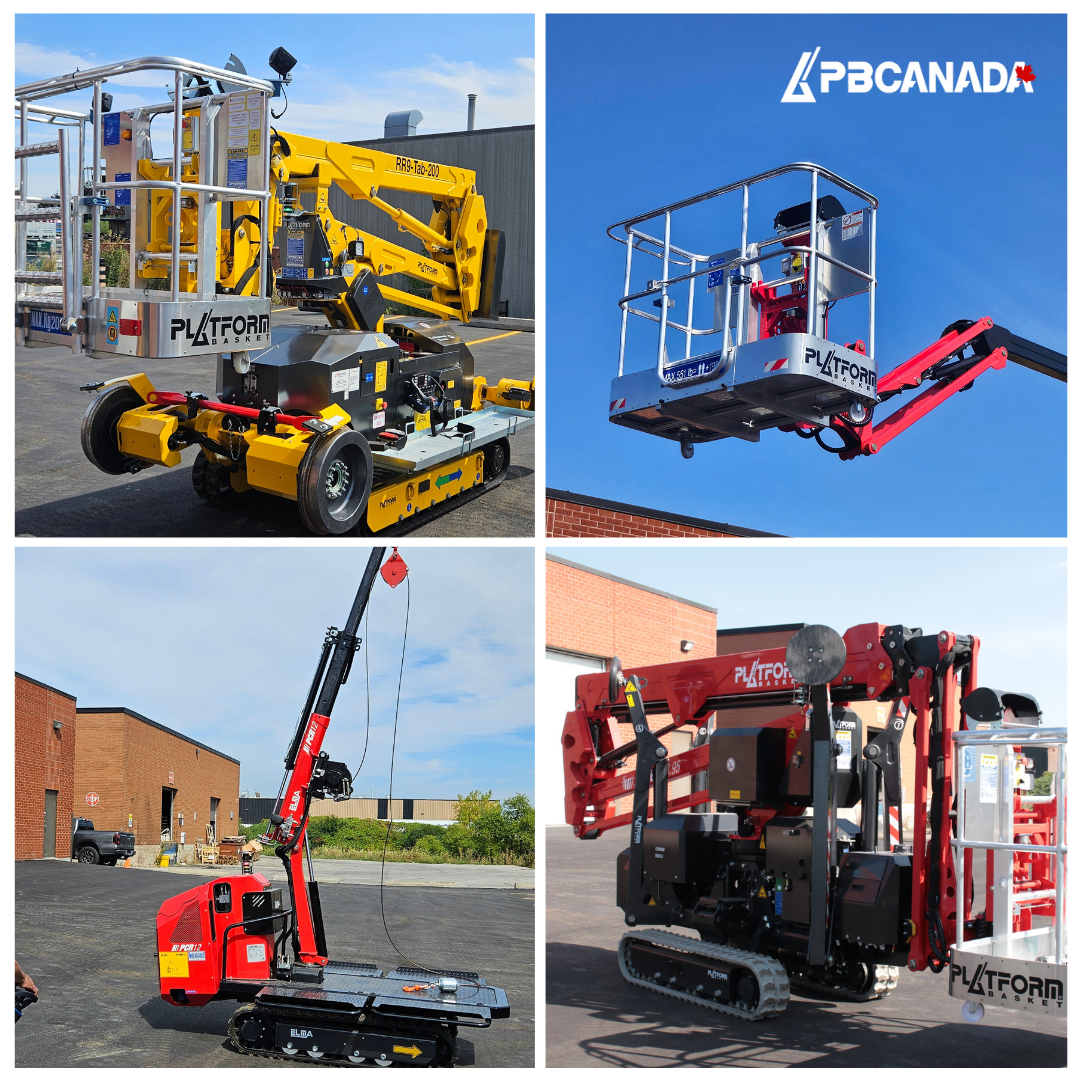
So if you are working indoors or on congested urban sites, you are better off using a spider lift with a smaller footprint. You can even opt for a mini crane if the space available to you is particularly narrow. Both of these machines are capable of fitting through doorways, hallways, and gates, making them perfect for confined work zones.
Ground conditions hinder stability
Matching the aerial lift platforms you use to the ground type you have to work on is critical. A mismatch between the two can result in a destabilized machine, thus creating a potentially dangerous work environment. The same holds true if you find the stabilizers of your lift need constant repositioning.
For such instances, we strongly recommend tracked spider lifts. Built to distribute weight evenly, they exert low ground pressure to maintain stability in challenging ground conditions such as snow, soft soil, and even finished indoor flooring. You can safely use them on rough terrains too without losing balance.
You have to work around the equipment
Under normal circumstances, your aerial lift is supposed to support your workflow. If the opposite is happening, you need to think long and hard about your choice of machine. Productivity can suffer greatly if the following issues show up:
- Restricted outreach
- Multiple repositionings
- Limited articulation
- Inability to tackle obstacles
Such issues are fairly common on railyards and trackside environments. If your job has taken you to railway corridors, you are better off using rail boom lifts. Their specialized features can easily handle all of the above constraints.
Set up and teardown take too long
Spending extra time on deployment and shutdown is a secret time and money drain. If you have to prepare extensively, use extra crew, and constantly adjust settings to get the machine up and running, efficiency can take a massive hit.
Instead of wasting too much time and effort, you should opt for a compact lift that offers rapid deployment. Faster setup has many perks, including low labor costs, less downtime, and greater productivity.
Increased operator discomfort
On-site, operator comfort should take center stage. If you find the operator complaining about issues such as limited visibility, awkward controls, or difficulty in positioning the basket, chances are you have got the wrong lift for the task.
What you need is an intuitive, flexible, and safe machine that has been designed to prioritize operator comfort – just like the ones we provide at Platform Basket Canada.
Conclusion
The right aerial work platform will increase worksite productivity, efficiency, and safety – not decrease it. If your lift is doing the latter, you must reassess your choice of machine. Matching your equipment to its job site is key to stability and smooth navigation.
So is sourcing your platform from the right manufacturer. Platform Basket Canada provides advanced aerial lift platforms that offer unparalleled performance in Ontario. Contact us to learn how our jobsite-ready lifts outperform their competitors.
FAQs
Are smaller aerial lifts always the better choice for all worksites?
Not always. Compact lifts work for indoor spaces or tight work zones. However, if they do not meet the reach, capacity, and stability your jobsite requires, you should opt for larger lifts.
Can spider lifts completely replace traditional boom lifts?
Yes, they can in certain scenarios. For example, jobsites that present the challenge of tight access or uneven ground conditions are better tackled by spider lifts than their traditional counterparts.
Should operators have a say in choosing aerial lifts?
Yes. Operator input is critical in deciding the suitability of an aerial work platform for its intended use. Their feedback can also help in the early identification of access and usability issues.