

Rail Boom Lifts For Subway Maintenance: What Contractors Need To Know
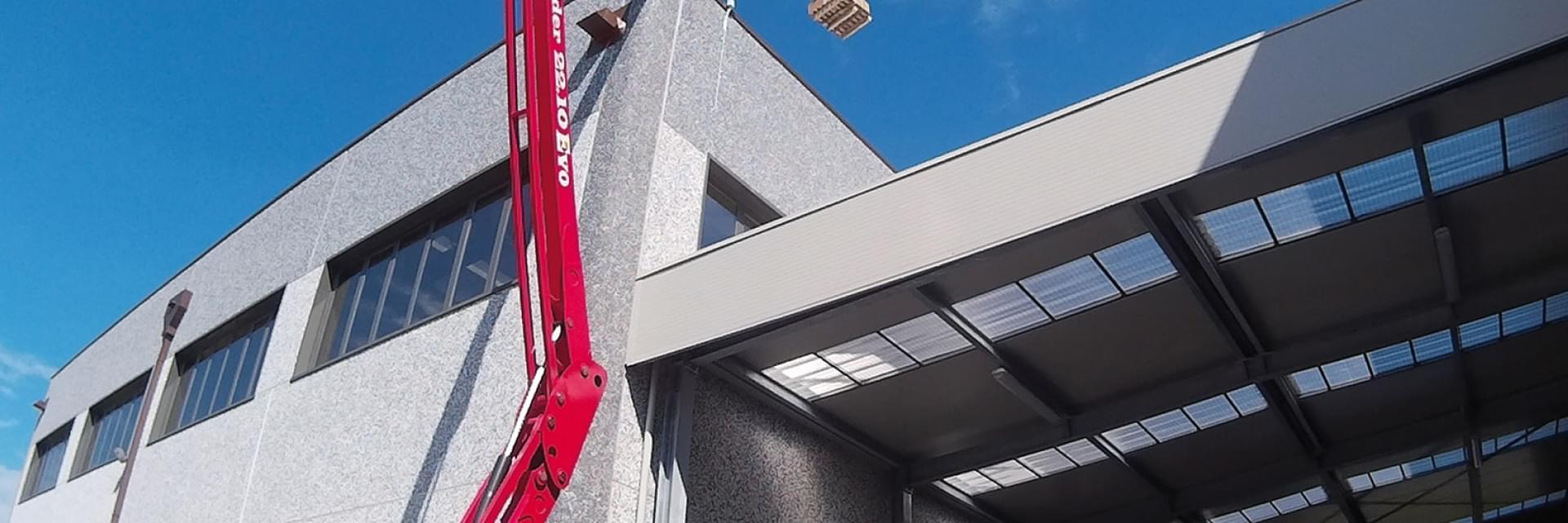
Of all the work zones possible, aerial platforms have proven to be a real blessing in transit zones. Their ability to navigate tracks and provide unparalleled access to overhead structures without compromising on safety is exactly what railway work sites need. Moreover, the fact that they support work in electrified corridors is a major advantage that doesn’t get talked about enough.
Their versatility doesn’t end there, though. These powerful machines can also be used for routine and emergency tasks in subway corridors, making them all-round equipment that serves the requirements of all kinds of transit zones.
In today’s blog, Platform Basket Canada, manufacturer of the best aerial lifts in Ontario, will show you why rail boom lifts are perfect for subway maintenance and how they can be used in such restricted and enclosed environments.
Why Is Overhead Maintenance A Challenge On Subway Systems?
Tunnels, stations, platforms, track corridors – these are the primary structures found in subway systems, and they are difficult to work with. Providing limited working space and access points, they restrict the use of large equipment by default.
Furthermore, overhead structures such as lighting, communications equipment, electrical infrastructure, signage, ventilation components, etc., demand specialized access that traditional scaffolding and ladders do not provide.
Add to the fact that subway environments are highly controlled, which automatically eliminates setups that can slow jobs down. On paper, it might seem challenging to find equipment that ticks all the boxes for subway maintenance tasks. However, rail boom lifts have proven to be of immeasurable value on sites that offer restricted access windows and follow strictly established procedures.
Why Rail Boom Lifts Are Perfect For Subway Maintenance
Properly specced rail boom lifts are designed to work in transit zones. Many of them come loaded with features that are well-suited to tasks involved in subway maintenance. Here is why they are the best choice for underground transit work:
Rail-compatible mobility
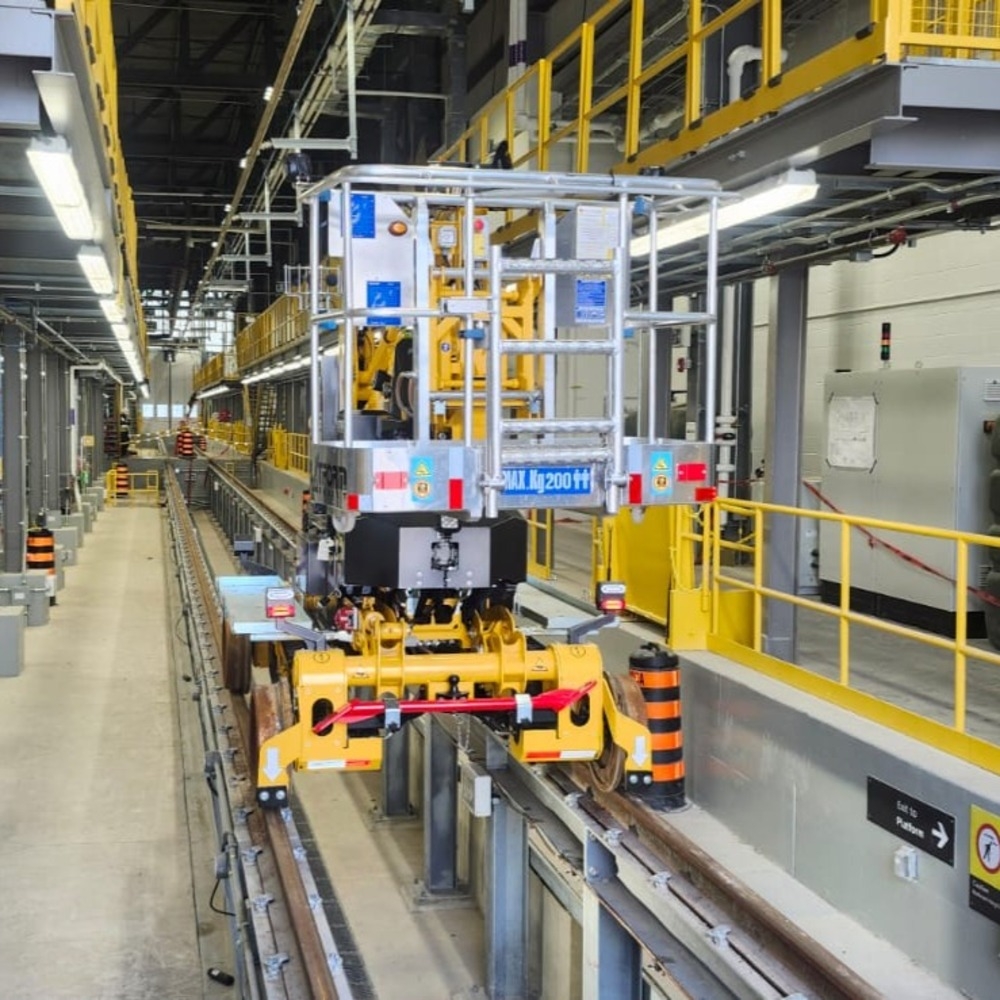
Boom lifts used in the railway sector are designed to travel along complex transit lines without losing their balance. This allows crews to bring their equipment as close to their working area as possible, thereby increasing reach and accessibility.
Compact positioning
Built with narrow access in mind, rail boom lifts feature a compact profile that allows them to be positioned accurately in environments where space comes at a premium. The addition of intuitive controls allows precise placement in narrow pathways where larger machines cannot fit.
Controlled access to overhead infrastructure
Featuring a flexible boom that provides a good amount of vertical and horizontal reach, workers can safely use boom lifts to work around common overhead obstacles. This is particularly useful for projects in which maintenance points are positioned far away from the immediate rail line.
Road-to-rail versatility
Granted, not all boom lifts come with this feature, but ours certainly does. Platform Basket Canada’s access equipment for railways offers dual-track mobility, which allows them to seamlessly transition from road to railway tracks without the need for additional towing equipment.
Best Applications Of Rail Boom Lifts In Subway Maintenance
Coming to the basic tasks rail boom lifts are perfect for in subway environments, these flexible machines can be used to carry out a wide range of work as efficiently and safely as possible:
Overhead lighting maintenance: Install new lighting systems or inspect, replace, and repair existing ones in underground corridors.
Electrical and communications infrastructure: Provide maintenance teams with access to elevated electrical and communications components.
Signage and passenger information systems: Install and service signs and other associated components within stations or platforms regularly.
Ventilation equipment inspection: Check and maintain underground ventilation structures to maintain optimal environments in subway stations.
Tunnel and station infrastructure repairs: Safely conduct elevated inspections and repairs in tunnels and around station openings in a quick and precise manner.
All it takes is planning access routes and mapping surrounding hazards to work safely in approved time windows. Just make sure the specifications of the machine match the requirements of the job.
Conclusion
Overhead maintenance is a critical part of keeping subway stations functional. However, accessing elevated work areas need not be a challenge. With the right rail boom lifts, operators and maintenance crews can complete all tasks on their list without encountering any of the inconvenience typically associated with overhead work. Platform Basket Canada’s rail boom lifts, in particular, can help Ontario contractors maintain subway systems in the most efficient way possible. Contact us to learn more about our advanced access equipment.
FAQs
Can rail boom lifts be used around electrified subway structures?
Yes, as long as the equipment is made for work in electrically charged environments. Contractors must come up with a proper work plan, identify energized systems, and gain required clearances before work begins.
How is rail access coordinated during subway maintenance?
Maintenance teams have to set up work schedules around access windows and track availability. Also, the lift’s travel route and location should be established in advance. This is the key to minimizing disruption.
What should crews consider when transporting a rail boom lift to a subway worksite?
Crews should scout the location for access points, deployment zones, overhead hazards, machine dimensions, and transport requirements before getting the lift to the main worksite.