

Boom Lift vs Scissor Lift: Which One Is The Right Fit For Your Jobsite?
Key Takeaways
- Scissor lifts primarily offer vertical elevation, whereas boom lifts offer both vertical and horizontal reach
- The working platforms of each differ, with scissor lifts featuring considerably more spacious baskets and higher load capacities
- A job’s working height, reach, terrain, and capacity requirements will determine the right lift type for it
- For railway infrastructure work, only specialized rail boom lifts should be used
Did you know 40% of all fall-based accidents on construction sites can be attributed to improper setup or overloading of elevated access machines? That’s the price you have to pay for choosing the wrong lift for the job.
Both boom and scissor lifts serve entirely different purposes and applications, and substituting one for the other makes little sense when lives are at stake. Today, Platform Basket Canada, engineers of aerial lifts in Ontario, will highlight the primary differences between boom and scissor lifts so you can choose the safer option for your site.
Boom Lift vs Scissor Lift: What's the Difference?
Let’s jump straight to the point. Scissor lifts are positioned directly underneath the working area and provide vertical access only. On the other hand, boom lifts offer both vertical and horizontal reach, allowing them to be placed slightly further away from the main work zone. They differ in other aspects too.
What Is a Boom Lift?
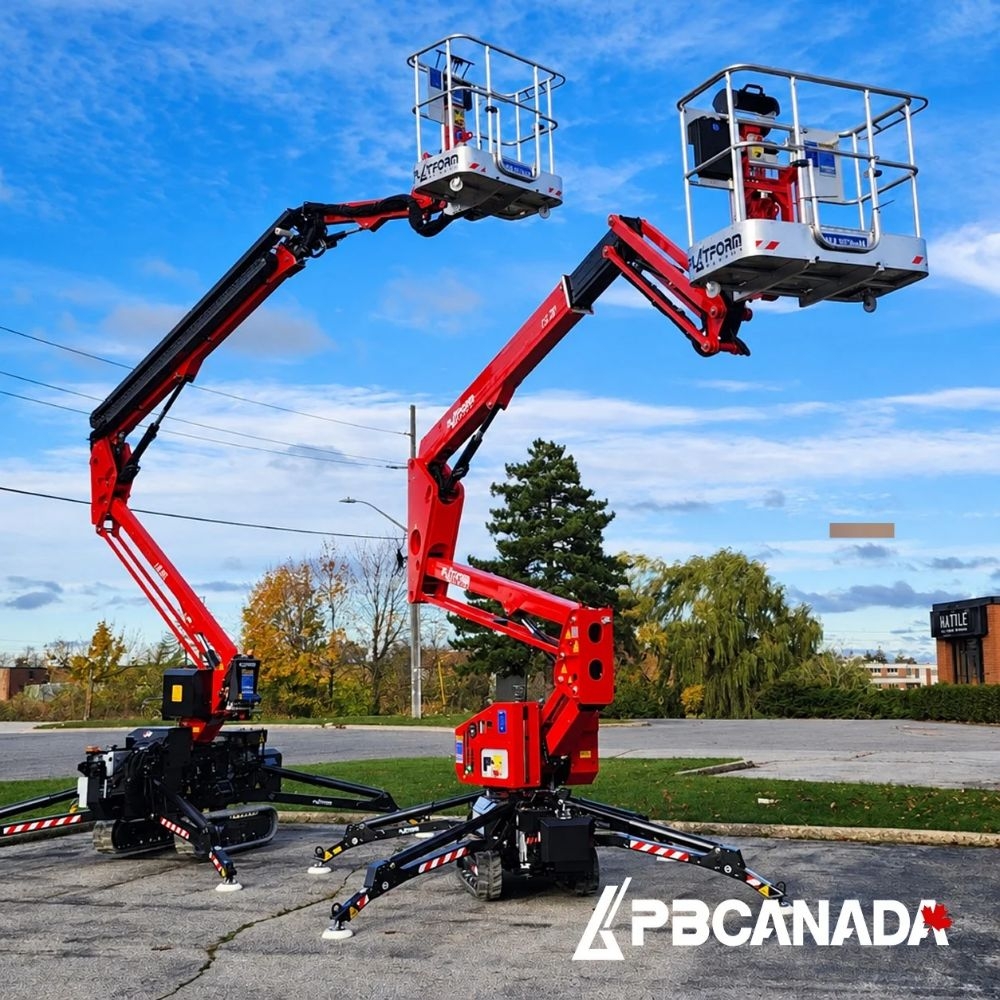
Powered by diesel or electric engines, boom lifts are aerial work platforms featuring an extendable telescopic or articulating boom arm with an adjoining basket that allows workers to access different working heights and angles.
What Is a Scissor Lift?
A scissor lift makes use of accordion-style arms that cross each other at fixed intersections to help raise or lower the platform. They only offer vertical movement.
How Their Reach and Movement Capabilities Differ
The greatest advantage of boom lifts is that they can work their way around overhead and surrounding obstacles with ease, since they don't really need to be placed directly underneath the working area.
Scissor lifts are less flexible in terms of movement and only go straight up or down. However, they offer more spacious platforms, allowing a greater number of crew members to work together at height.
Boom Lift vs Scissor Lift: Key Differences Compared
To dive deeper into how these two lift types stack against each other, let’s take a look at the table below. After that, we will get into the specifics of how they vary in terms of reach, capacity, and operating conditions.
| Key Operational Criteria | Boom Lift | Scissor Lift |
| Working Height | Can extend up to 200 ft. | Generally extends up to 60 ft. |
| Horizontal Outreach | Articulating boom models provide horizontal access | Meant for vertical access only; doesn’t provide horizontal access |
| Platform Capacity | Tends to have narrower baskets with lower weight limits | Wider, more spacious baskets with higher weight limits |
| Maneuverability | Can be safely positioned around obstacles | Has to be positioned directly underneath the working area |
| Terrain Compatibility | Specific configurations allow use on rough, uneven, or sloping terrains | Best used on flat surface conditions; rough terrain options available |
| Cost | Higher purchasing and rental costs | More affordable pricing with less operational flexibility |
Working Height and Horizontal Reach
If maximum height is the prerequisite of a job, boom lifts are a better choice. Their telescopic kind can reach heights of up to 200 ft. Scissor lifts generally manage to reach around a maximum of 60 ft.
Platform Capacity and Workspace Requirements
Scissor lifts win this round. They are the more spacious of the two, thanks to their wider baskets, which provide enough room to carry multiple crew members and materials. Boom lifts feature narrower platforms and are typically suitable for one- or two-man jobs.
Manoeuvrability and Obstacle Clearance
Boom lifts shine in the maneuverability department. They are more compact, and their articulating arms can be virtually positioned around any obstacle for easy access. Scissor lifts require extensive ground and overhead clearance to work.
Indoor vs Outdoor Operating Conditions
Both offer electric engine configurations that are much quieter and better suited to indoor work. Their diesel counterparts, though less eco-friendly, can be used outdoors.
Equipment Costs and Operational Efficiency
Rental rates of scissor lifts are comparatively lower than those of boom lifts. But that doesn’t make them automatically better for a job. Selection should still be anchored in the job’s ground requirements rather than pricing alone.
Types of Boom Lifts and Scissor Lifts: Which Suits Your Needs?
The differences between scissor and boom lifts don’t end at their performance parameters. Both of them come in several types too, and each type has its own forte, which must be considered before selection.
Articulating Boom Lift vs Scissor Lift
Featuring jointed sections to reach over and around obstacles, articulating boom lifts are champions in the flexibility department. Scissor lifts are better suited for straightforward overhead jobs only.
Telescopic Boom Lift vs Scissor Lift
Telescopic boom lifts have a single extendable arm that can reach impossible heights. Almost 200 ft! The vertical reach of scissor lifts, in comparison, can feel inadequate for certain jobs. It’s restricted to a maximum of 60 ft. for most models.
Electric vs Rough-Terrain Scissor Lifts
Both lift types can work indoors and outdoors. Rough-terrain scissor lifts have been designed to tackle the demands of outdoor jobs and can remain stable on uneven grounds, provided their load capacity is strictly adhered to. However, they are not as suited to sloping or unpredictable surface conditions as boom lifts are. The electric versions of both can be used indoors.
Specialized Rail Boom Lifts for Railway Applications
Rail projects are inherently complex. So it is best to use specialized rail boom lifts for them. These machines are designed to handle the workload of electrified corridors with no major safety risks.
When Is a Boom Lift Better Than a Scissor Lift?
Scissor lifts have their own place in interior and exterior maintenance projects, warehouse management, and material movements. But boom lifts hold the trump card in the following situations:
Jobs Requiring Horizontal Reach and Obstacle Clearance
Jobs in densely packed urban or rural environments benefit greatly from boom lifts, as these machines can provide exceptional horizontal reach, even when obstacles are present.
Construction and Building Maintenance at Height
Aerial platforms in construction are a force to reckon with. From material handling to installations, from reaching facades to rooflines, they can do it all and then some.
Outdoor Projects With Complex Access Requirements
Think uneven site layouts, obstacles, and multiple elevated work zones in tight access spaces that make positioning difficult. If there’s one machine that can conquer them all, it’s the boom lift.
When a Scissor Lift Remains the Better Option
All said and done, scissor lifts have their own place in elevated work. They prove to be the better choice for almost all tasks that require overhead access. Or where crews need larger platforms to fit in more members and materials.
Why Choose a Boom Lift for Complex Elevated Work?
When maximum elevation is a priority, choosing a boom lift is not just operationally wise but it’s also considerably safer. These machines bring their own strengths to complex elevated work:
Greater Flexibility for Reaching Difficult Work Areas
Tasks involving construction, arboriculture, property maintenance, etc. often take place at incredible heights, and boom lifts deliver on that front. They can access the highest points of a job in a risk-free manner, thanks to their stabilizers and outrigger pads.
Improved Access Around Structures and Obstacles
Whether overhead or nearby, boom lifts with their compact build and extendable arm can be positioned just about anywhere and still be able to access the core working area.
Specialized Boom Lift Solutions for Industrial Applications
Aerial work platform applications span far and wide. Purpose-built configurations can be used for highly specialized work such as renewable energy infrastructure maintenance, railway maintenance, telecommunications, and much more.
Boom Lift vs Scissor Lift: Cost and Productivity Considerations
While cost is definitely a factor to consider, platform selection should still largely center around productivity concerns. Here’s how both machines stack up in terms of price and efficiency.
Rental vs Purchase Cost Considerations
Depending on the job’s duration or the renter’s requirements, purchasing boom and scissor lifts can be considered. However, both are considerably more expensive to purchase as opposed to renting, and scissor lifts have an edge over boom lifts in terms of affordability.
Setup Time and Operator Productivity
Scissor lifts come with a minor learning curve, whereas tracked boom lifts are complex to operate. The latter needs certified operators to function properly.
Long-Term Maintenance and Operating Costs
A little research is necessary here. The servicing costs of both platforms can vary depending on their configuration. So factoring parts availability and expected utilization is critical before purchasing.
Safety Considerations When Choosing Boom Lifts or Scissor Lifts
Whether you go for scissor lifts or boom lifts, using them safely is what counts. We recommend diligently following these best safety practices:
Fall Protection and Platform Stability
Stick to the manufacturer’s recommendations on load limits and other applicable provincial or territorial rules for maximum safety.
Ground Conditions, Weather, and Wind Restrictions
Check permissible weather conditions for lifts before deploying them, especially outdoors. Verify surface conditions as well to ensure they remain within the machine’s operating limits.
Operator Training and Pre-Use Inspections
Always hire certified, trained operators and complete all required checks before running the machine. Following best aerial lift safety practices protects both personnel and property.
How to Choose Between a Boom Lift and Scissor Lift
Make the selection process easier by using the following steps to determine whether scissor lifts or boom lifts fit on-site workflow better:
Step 1 — Determine Required Working Height and Reach
Identify the vertical and horizontal access requirements of the job at hand before picking out a lift for it.
Step 2 — Assess Jobsite Access and Ground Conditions
Measure the dimensions of doorways and clearance paths to select the most appropriately sized lift. Check the terrain and operating surface as well to ensure the machine is compatible with it.
Step 3 — Calculate Platform Capacity Requirements
Add up the total expected weight of workers, tools, and materials and verify it against the platform’s capacity.
Step 4 — Evaluate Safety and Operator Requirements
Consider on-site hazards, operator availability, and site restrictions to ensure the chosen lift meets all three.
Step 5 — Compare Equipment Availability and Total Costs
Account for aerial lift jobsite preparation in total costs and check equipment availability to prevent overshot budgets and delays.
Boom Lift vs Scissor Lift Selection Checklist
Height, Reach, and Platform Capacity Requirements
- Required working height and horizontal outreach
- Combined weight of workers, tools, and other materials
Jobsite Access and Environmental Conditions
- Ground conditions and site hazards
- Clearance and access dimensions
Safety, Budget, and Equipment Availability
- Operator qualifications and site safety requirements
- Equipment availability and total budget
FAQs
What Is the Main Difference Between a Boom Lift and Scissor Lift?
The main difference lies in their mechanism and reach. Scissor lifts use criss-cross members to provide vertical access only. Boom lifts use an articulating or telescopic arm to provide vertical and horizontal reach.
Can a Boom Lift Reach Higher Than a Scissor Lift?
Yes. The maximum height range of a boom lift is significantly higher than that of a scissor lift.
Which Is Safer: A Boom Lift or Scissor Lift?
Modern versions of both are safe to use as long as their operating conditions are adhered to on site.
Are Boom Lifts More Expensive Than Scissor Lifts?
Yes, the average rental and purchase price of boom lifts tends to be on the higher side than scissor lifts, thanks to the former’s greater outreach and versatility.
Which Lift Is Better for Outdoor Construction Work?
Boom lifts are the better choice for complex construction requirements. However, scissor lifts come in handy on simple construction sites.
Explore Boom Lift Solutions From Platform Basket Canada
Platform Basket Canada is the leading manufacturer of Italian-engineered aerial lifts in Ontario. We offer a range of industrial platforms, including tracked boom lifts, rail boom lifts, and much more. Contact us to explore our lift options.
Get Expert Guidance on Selecting the Right Boom Lift
Need technical assistance for aerial lift selection? Talk to our experts and request an equipment quote today!